
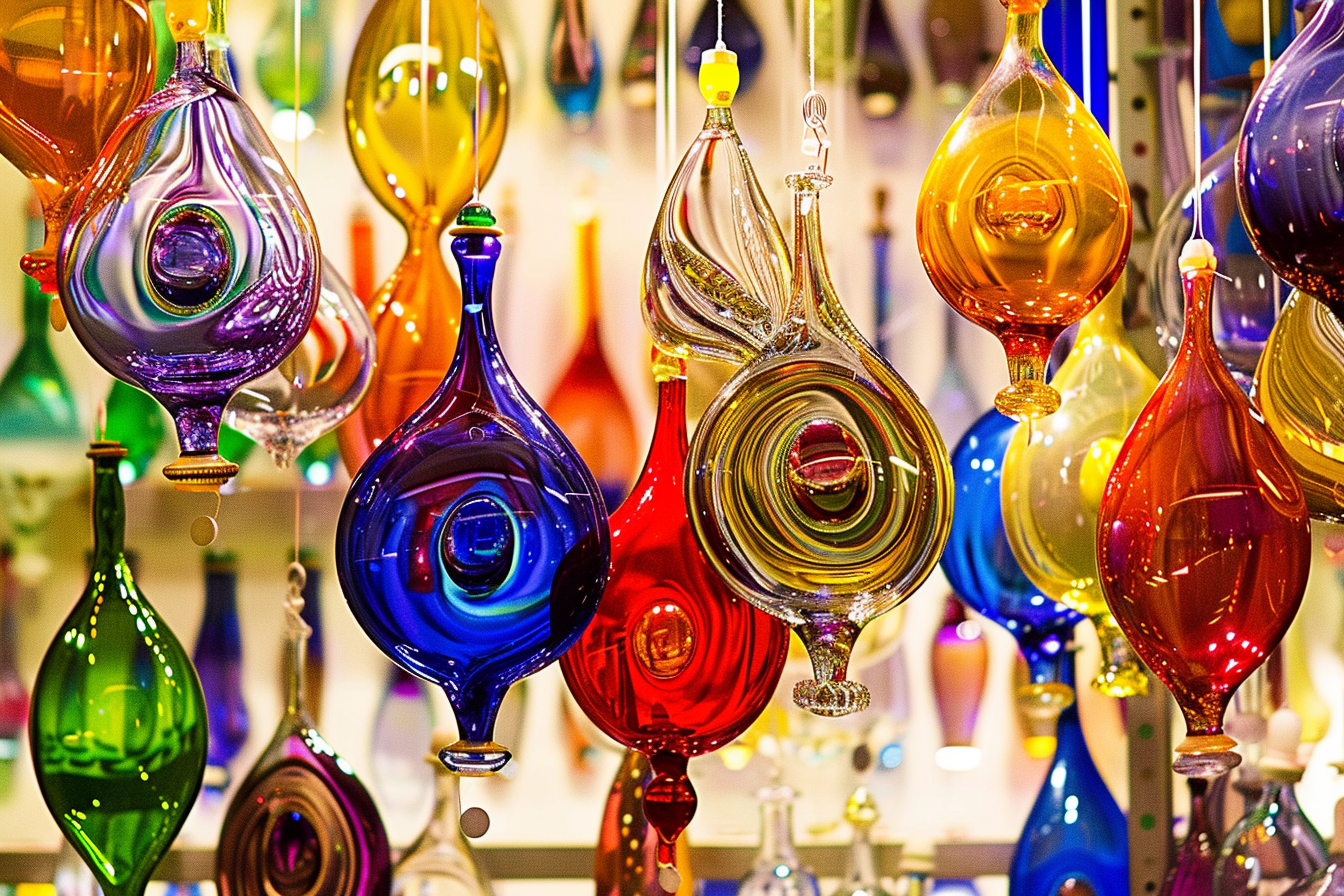
Glass lighting does more than brighten an interior. Its transparency, color, texture, and silhouette shape how a room feels throughout the day, turning illumination into an architectural material that can define atmosphere without overwhelming the surrounding design.
Designing Light as Part of the Space
A thoughtful lighting concept begins with the relationship between the glass object and its environment. Ceiling height, natural light, furniture proportions, wall finishes, and viewing angles all influence how a pendant or decorative installation will be perceived. A skilled Murano glass maker interprets these elements before determining dimensions, surface treatments, colors, and forms. The result is not simply an attractive fixture, but a composition that belongs to the room and supports its intended character.
This approach becomes especially valuable in hospitality, retail, residential, and public interiors, where lighting often has to perform several roles at once. It may create intimacy above a dining table, establish rhythm across a reception area, or become a visual landmark in a large entrance hall. Scale and repetition can transform individual glass pieces into a unified installation, while carefully controlled variation prevents the arrangement from appearing mechanical or impersonal.
From Creative Direction to Glass Production
Custom glass production requires a productive dialogue between designers and artisans. Initial ideas may arrive as sketches, technical drawings, material boards, or references to a particular mood. These inputs must then be translated into glass forms that are visually convincing and technically suitable for production. Working with an experienced murano glass maker allows creative teams to explore bespoke pendant lighting, blown components, decorative plates, and coordinated collections without losing sight of practical project requirements.
The most effective process balances artistic sensitivity with clear decisions. Diameter, weight, suspension method, opacity, edge treatment, and color consistency can all affect the final installation. Some projects benefit from nearly identical components, while others gain energy from subtle differences created through hand production. Controlled individuality is one of the qualities that gives artisan glass its distinctive presence: every element contributes to a coherent whole while retaining traces of the process that formed it.
Creating Atmosphere Through Color and Texture
Color in glass behaves differently from color applied to an opaque surface. It can deepen, soften, or shift depending on the light source, the thickness of the material, and the background against which the piece is viewed. A Murano glass maker can use this responsiveness to create lighting that changes gently between daylight and evening conditions. Pale tones may bring quiet warmth to minimalist rooms, whereas saturated shades can establish a stronger identity within neutral architectural settings.
Texture also affects both appearance and illumination. Smooth glass can produce crisp reflections and a polished visual language, while ribbed, layered, or irregular surfaces diffuse light and introduce movement. These characteristics are particularly important when a fixture is visible from several levels or viewpoints. Instead of treating texture as decoration added at the end, designers can use it from the beginning to control glare, visual weight, and the emotional quality of the installation.
A Lasting Identity Beyond Passing Trends
Bespoke glass is most successful when it responds to the project rather than imitating a temporary fashion. Proportions should remain convincing after trends change, and colors should maintain a meaningful relationship with the architecture. This does not require conservative design. On the contrary, experimentation with clusters, asymmetry, sculptural forms, and unexpected combinations can produce memorable results when every choice is guided by the space and its purpose.
The value of collaborating with a Murano glass maker therefore lies in more than access to a celebrated craft tradition. It offers a way to turn an abstract design intention into a tangible source of light, color, and spatial rhythm. When craftsmanship and architectural thinking meet, glass becomes an active part of the interior: one that can welcome visitors, guide attention, create intimacy, and give a project an identity that feels both distinctive and enduring.