
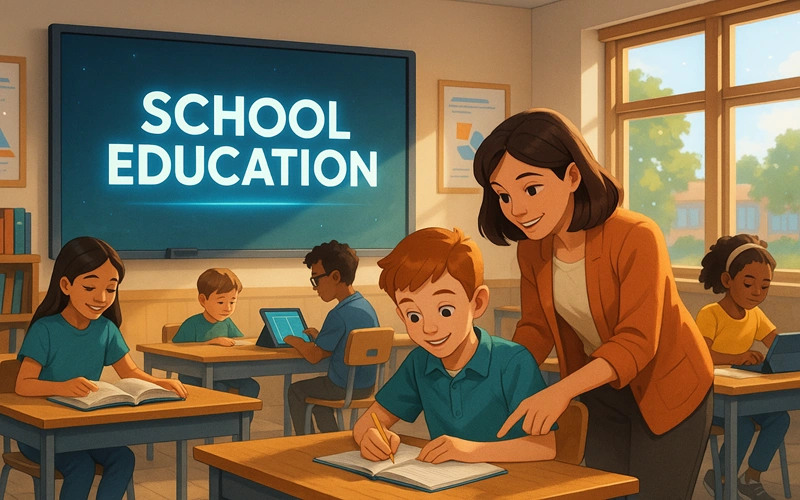
School education plays a huge role in every child’s life. It helps children learn new things, grow as individuals, and prepare for the future. From reading and writing to math and science, school education teaches children the basic knowledge they need. But it doesn’t stop there. It also helps kids learn how to make friends, solve problems, and understand the world around them.
What Is School Education?
School education is the learning that happens in schools. It usually starts when a child is around 4 to 6 years old and continues until they are about 17 or 18. It includes lessons in subjects like:
-
Math
-
Science
-
English or native language
-
Social studies
-
Arts and physical education
School education is split into different levels:
-
Primary or Elementary School: This is the first stage of school, usually from grades 1 to 5 or 6.
-
Middle School: Also called junior high in some countries, this stage is from grades 6 to 8.
-
High School or Secondary School: This is the final part of school education, usually from grades 9 to 12.
Each level builds on the knowledge gained before, helping children grow step by step..
Read More: Early Childhood Education Certificate
Why Is School Education Important?
School education does more than just teach facts. It helps children:
1. Learn Life Skills
In school, students don’t just memorize information—they also learn important life skills like:
-
Problem-solving
-
Teamwork
-
Time management
-
Decision-making
-
Communication
These skills are useful in everyday life and help students succeed in future careers.
2. Grow Socially and Emotionally
School education also teaches children how to work with others. It helps them make friends, understand different opinions, and manage emotions. Activities like group projects, sports, and school clubs support emotional growth.
3. Build a Career Foundation
Without school education, it’s hard to find a good job. Employers look for people who can read, write, solve problems, and think critically. These are all things students learn in school.
4. Encourage Personal Development
Through different subjects and activities, students discover their strengths and interests. A student might find they love science, enjoy drawing, or are good at sports. School helps them explore their talents and grow in confidence.
How Does School Education Work?
School education is usually managed by the government or private groups. Teachers are trained to help students learn in fun and effective ways. Here’s how the system generally works:
1. Curriculum
Each country or state creates a curriculum—a list of subjects and topics that must be taught. This helps all schools follow similar learning goals.
2. Teachers and Classrooms
Teachers plan lessons based on the curriculum. They explain ideas, ask questions, give assignments, and check if students understand.
3. Exams and Tests
Tests are used to measure how much students have learned. They help teachers know if students need more help in certain areas.
4. Activities and Extra Classes
Many schools also offer music, art, dance, sports, and computer classes. These activities make learning more fun and give students more chances to discover what they like.
Different Types of School Education
Not all schools are the same. There are several types of school education:
1. Public Schools
These schools are run by the government and are usually free. They follow national or state rules and curriculums.
2. Private Schools
Private schools are run by private groups. They may charge fees and offer special programs or teaching styles.
3. Homeschooling
Some families choose to teach their children at home. This is called homeschooling. It allows parents to create a learning plan that fits their child’s needs.
4. Online or Virtual Schools
With the internet, many students now study from home using online tools. This form of education became more common during the COVID-19 pandemic.
What Makes a Good School Education?
A good school education is not just about getting high marks. It should help students become curious, creative, and confident. Here are some signs of a good education:
-
Caring and trained teachers
-
Safe and clean learning environment
-
Up-to-date learning materials
-
Fair exams and feedback
-
Activities beyond just books
-
Support for different learning styles
Schools that care about the full development of students—both in mind and heart—give the best education.
Challenges in School Education
Even though education is important, it faces some big challenges around the world:
1. Lack of Access
In some areas, children cannot go to school because of poverty, war, or lack of schools nearby.
2. Poor Quality
Some schools do not have enough teachers, books, or clean classrooms. This affects how well students learn.
3. Too Much Pressure
In some places, students are under too much pressure to get top marks. This can make them stressed and unhappy.
4. Outdated Methods
Some schools still use old teaching styles that don’t work for today’s students. Modern education needs creative and tech-friendly methods.
How Can School Education Improve?
To make school education better, we need to:
-
Train and support teachers regularly
-
Use technology wisely in classrooms
-
Make learning fun and interactive
-
Include all children, no matter their background
-
Create fair and updated curriculums
-
Involve parents and communities
Governments, teachers, parents, and students all play a role in making education stronger and more useful for everyone.
Role of Parents in School Education
Parents are a big part of a child’s learning. When parents help with homework, attend school events, and talk about school at home, children do better. Schools and parents should work as a team to support each child.
The Future of School Education
The future of education looks exciting. With smartboards, computers, and AI tools, students can learn in new and better ways. But we must also remember to teach values like honesty, respect, and kindness. Technology should help, not replace, good teachers and human care.
Final Thoughts
School education is one of the most important parts of life. It helps every child become smart, kind, and ready for the world. When done right, education not only teaches facts but also builds better people. Whether in a classroom, online, or at home, the goal is the same: to help children grow into happy, capable adults.
By understanding the value and working to improve it, we can ensure that education continues to light the path toward a brighter future.
FAQs
1. Why is education important for children?
education teaches children the basic knowledge and skills they need to succeed in life, including reading, writing, problem-solving, and social skills.
2. What are the main stages of school education?
The main stages are primary (elementary) school, middle school, and high (secondary) school.
3. How can school education be improved?
By training teachers, updating learning materials, using technology, and involving parents, education can become more effective and enjoyable.
Read More: Cool Electronic Gadgets